
Search Engine Marketing Intelligence: Complete Guide to Smarter SEO & SEM Growth
In today’s competitive digital world, success in search engines is no longer based on guesswork. Businesses that grow faster rely on search engine marketing intelligence to understand user behavior, improve keyword targeting, and make smarter marketing decisions.
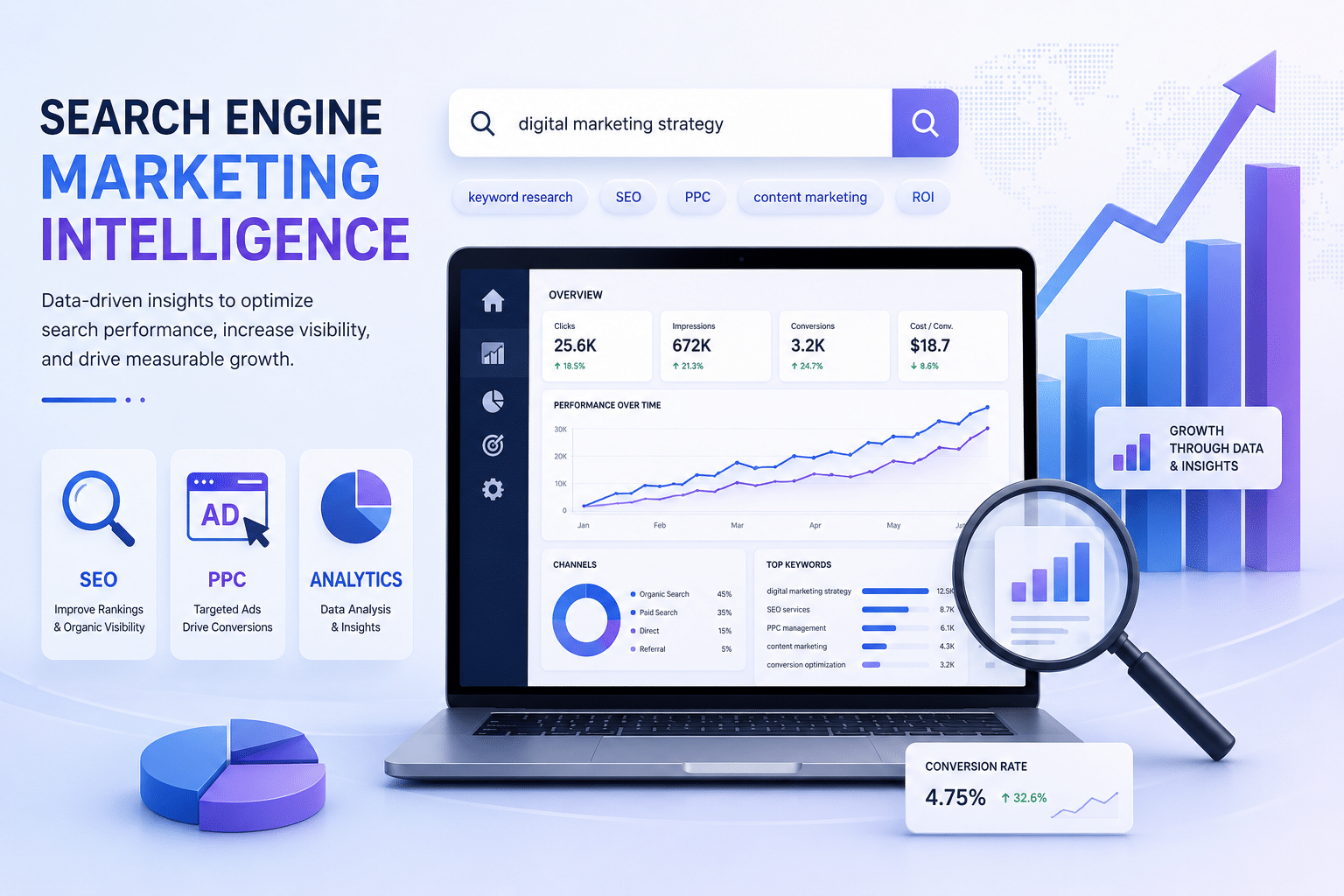
Instead of running campaigns blindly, this approach uses real data to identify what works, what doesn’t, and where opportunities exist. Whether you are focusing on SEO, paid ads, or both, using search intelligence can significantly improve your results.
What is Search Engine Marketing Intelligence?
Search engine marketing intelligence is the process of collecting, analyzing, and using search data to improve marketing strategies, keyword targeting, and campaign performance.
It helps businesses:
Understand what users are searching for
Identify high-converting keywords
Analyze competitors
Optimize campaigns for better ROI
What is Search Engine Marketing?
Search engine marketing (SEM) is a digital strategy used to promote websites through search engines using paid ads and organic techniques.
It includes:
Paid advertising (PPC)
Keyword targeting
Traffic generation from search engines
SEM allows businesses to appear in front of users exactly when they are searching for related products or services.
SEM Marketing Meaning (Simple Explanation)
SEM marketing means using search engines like Google to reach potential customers by targeting relevant keywords and search queries.
It focuses on bringing targeted traffic that is more likely to convert into leads or sales.
Why Search Engine Marketing Intelligence Matters
Using search intelligence gives you a strong advantage over competitors. Instead of guessing, you rely on data-driven insights.
Key benefits include:
Helps find high-converting search engine marketing keywords
Improves ad performance and ROI
Provides deep understanding of user intent
Identifies competitor strategies
Supports better marketing decisions
How to Use Search Engine Marketing Intelligence
To get real results, follow a structured approach:
1. Keyword Research
Identify keywords based on:
Search volume
Competition
User intent
Example long-tail keyword:
how to use search engine marketing intelligence for business growth
This type of keyword attracts highly targeted users who are ready to take action.
2. Data Analysis
Track and analyze:
Click-through rate (CTR)
Conversion rate
Keyword performance
3. Competitor Research
Understand:
Which keywords competitors rank for
Their ad strategies
Content gaps you can target
4. Optimization
Continuously improve:
Campaigns
Landing pages
Content strategy
Search Engine Marketing vs SEO
Many people confuse these two. Here’s a simple breakdown:
SEO focuses on organic (free) traffic
SEM includes both paid ads and organic strategies
For best results, both should work together using search intelligence.
Best Practices for SEM Marketing
To maximize results:
Focus on high-intent keywords
Use long-tail keywords for better conversions
Optimize landing pages for user experience
Track performance regularly
Test and improve continuously
Common Mistakes to Avoid
Avoid these issues that limit growth:
Targeting only broad keywords
Ignoring user intent
Not analyzing data
Weak landing pages
No performance tracking
Future of Search Engine Marketing Intelligence
Search behavior is evolving quickly. With AI and automation, marketers now have access to deeper insights than ever before.
Future success depends on:
Data-driven strategies
Personalized experiences
Advanced keyword targeting
Real-time optimization
Businesses that adapt early will gain a strong advantage.
Quick Summary
Search engine marketing intelligence uses data to improve marketing performance
SEM includes paid ads and organic strategies
Keyword research and user intent are key factors
Data analysis helps improve ROI and conversions
Frequetly Asked Question
What is search engine marketing intelligence?
Search engine marketing intelligence is the process of using search data to improve marketing strategies, keyword targeting, and campaign performance.
What is search engine marketing?
Search engine marketing is a strategy used to promote websites through paid ads and organic methods on search engines.
What is SEM marketing meaning?
SEM marketing means using search engines to drive targeted traffic through paid ads and optimized content.
What are search engine marketing keywords?
These are search terms that users type into search engines, which businesses target to attract traffic and conversions.
Why is search engine marketing important?
It helps businesses reach users actively searching for their services, increasing visibility, traffic, and sales.
Conclusion
Search engine marketing is no longer just about ads or rankings. It is about understanding data and using it effectively.
By applying search engine marketing intelligence, you can identify the right keywords, understand your audience better, and improve overall performance.
If your goal is long-term growth, focusing on data, user intent, and continuous optimization is the key to success.